

Configuring Webhooks
Developers can follow the below guide to learn how to listen to webhooks:
-
Open Webhook Settings
Go to the Coinflow Admin Dashboard → Developers → Webhooks -
Add a new Webhook URL

-
Generate a Webhook Validation Key

-
Configure Webhook Settings
Select Latest Webhook Version > Select all events to listen to > Save.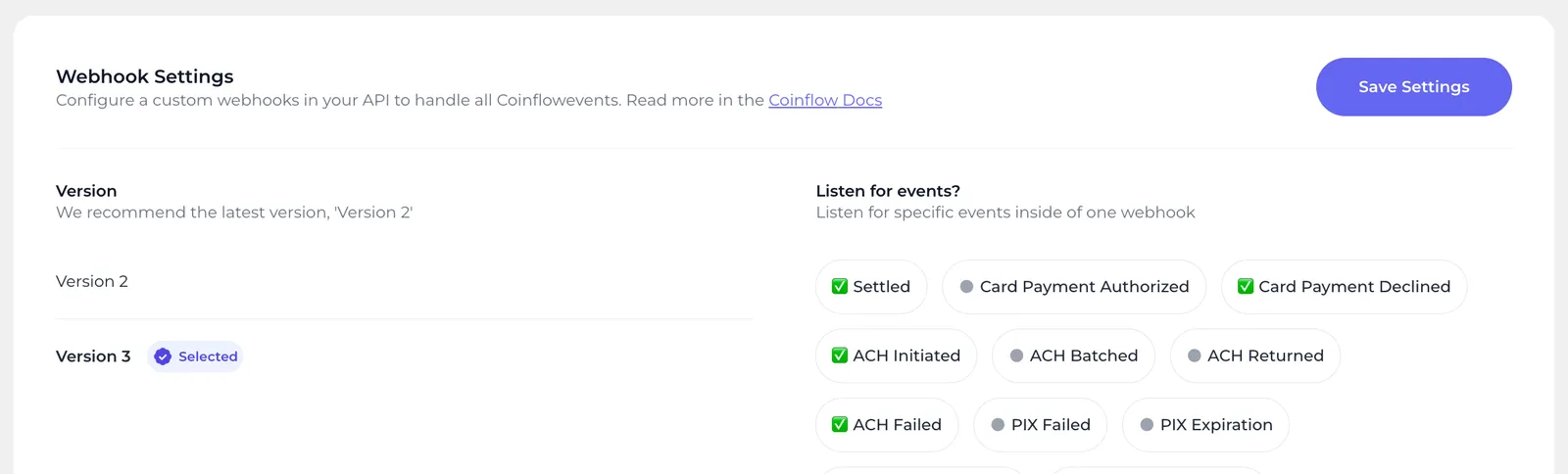
-
Add an Endpoint on Your Server
Create a POST route to receive events from Coinflow.
Automatic Retries
If a webhook fails Coinflow will retry sending the webhook until your server returns a 200 OK. Your server must respond within 5 seconds, or the request times out and is retried.
Retries use exponential backoff, with the wait time roughly doubling after each failed attempt. Coinflow makes up to 16 attempts (one initial delivery plus 15 retries):
If every attempt fails, Coinflow stops retrying after approximately 18 hours. You can resend webhooks from the Merchant Dashboard or through the Coinflow API.