
🛡️How to Interpret 3DS-Verified Transactions
🛡️How to Interpret 3DS-Verified Transactions
Exempting Customers from 3DS Processing
When to Exempt a User from 3DS
Exempting a user from 3DS allows transactions to process without additional authentication, reducing friction and improving conversion rates. This is typically applied to:
- Low-risk transactions (e.g., small purchases)
- Trusted, repeat customers
🚧 Note: Some issuing banks, especially in the EU, enforce stricter fraud rules and may override 3DS exemptions, declining transactions instead.
How to Exempt a User from 3DS
Merchants can exempt a customer from 3DS by:
- Navigating to the customer’s record
- Selecting Exempt 3DS Processing

How to Interpret 3DS Transactions
Definitions
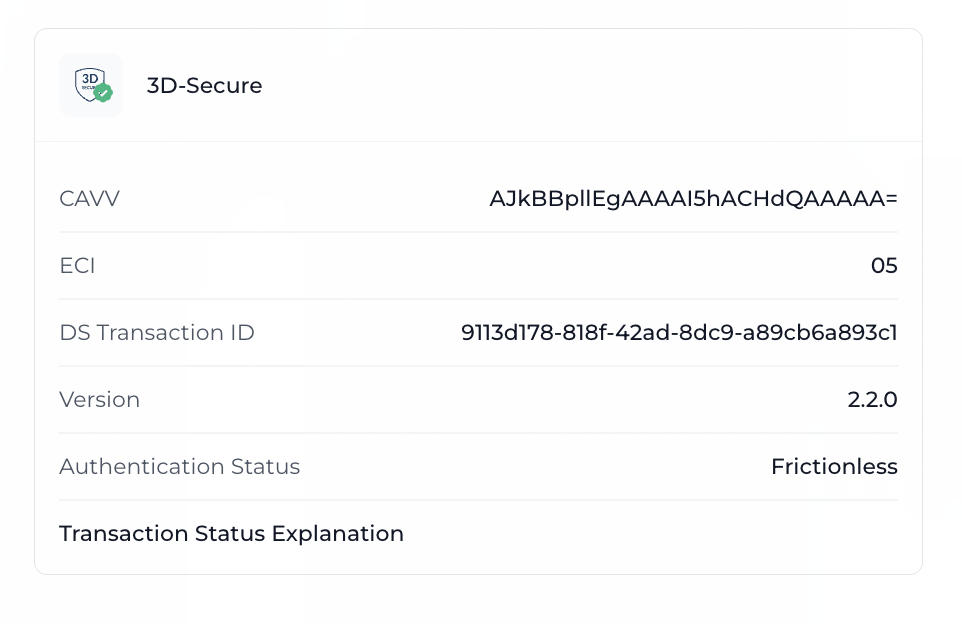
- CAVV: Cardholder Authentication Verification Value, a unique code confirming the cardholder’s authorization.
- ECI: Electronic Commerce Indicator, indicating the outcome of the 3DS authentication.
- DS Transaction ID: A unique identifier for the transaction.
- Version: The version of the 3DS authentication protocol used.
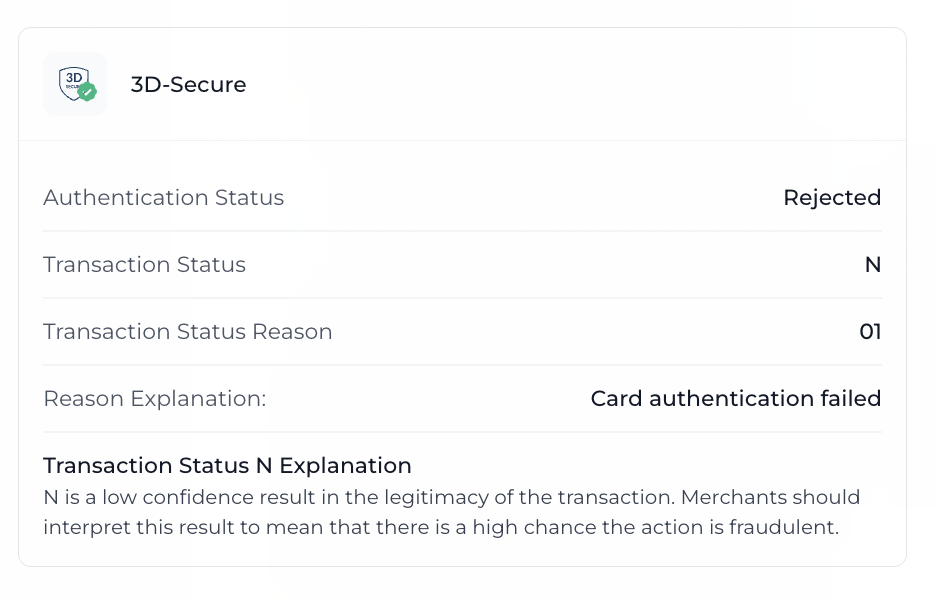
- Authentication Status: The result of the authentication attempt (successful or failed).
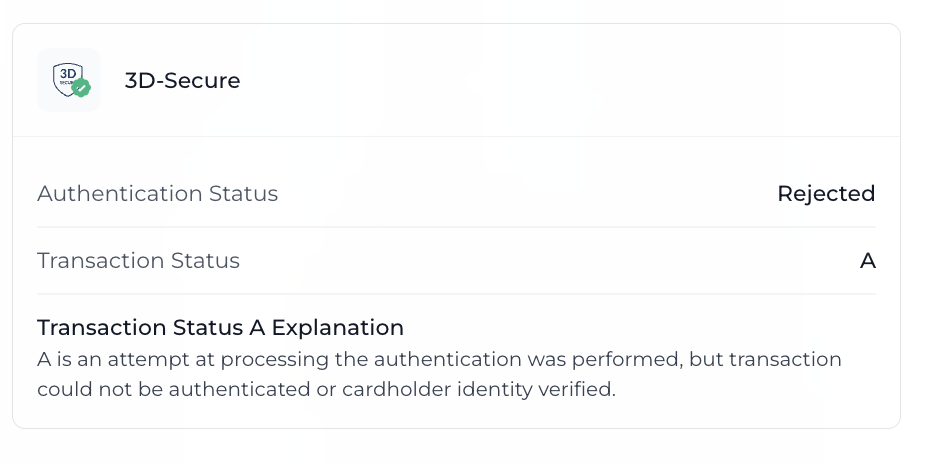
- Transaction Status: The result of the issuer’s authentication process.
- Transaction Status Reason - Codes which represent why a transaction was approved, rejected, or flagged.
- Reason Explanation - The explanation associated with the transaction status reason code.
- Access Control Server (ACS) refers to the 3DS authentication process that facilitates communication between the card issuer, the merchant, and the cardholder.
Breakdown of Transaction Statuses
Details on the A (Attempted) Status
When Card Networks Return A (Attempted) Instead of the Issuer
If the issuer doesn’t support 3DS or has authentication issues, card networks (Visa, Mastercard, etc.) step in to assess the transaction using their own fraud detection tools.
- Issuer Doesn’t Support 3DS: The card network may return A (Attempted) or U (Unavailable) if the transaction can’t be authenticated.
- Card Network’s Role: The network evaluates factors like transaction amount, merchant category, and transaction history.
- Outcome: If the card network approves the transaction, the issuer assumes liability. If the transaction is rejected, A (Attempted) is returned, and the issuer assumes liability while the transaction fails.
Breakdown of Transaction Status Reasons and Explanations
Visual Examples
Successful 3DS Transactions
Rejected 3DS Transactions