

Delegated Payout from Merchant Wallet
Delegated Payout from Merchant Wallet
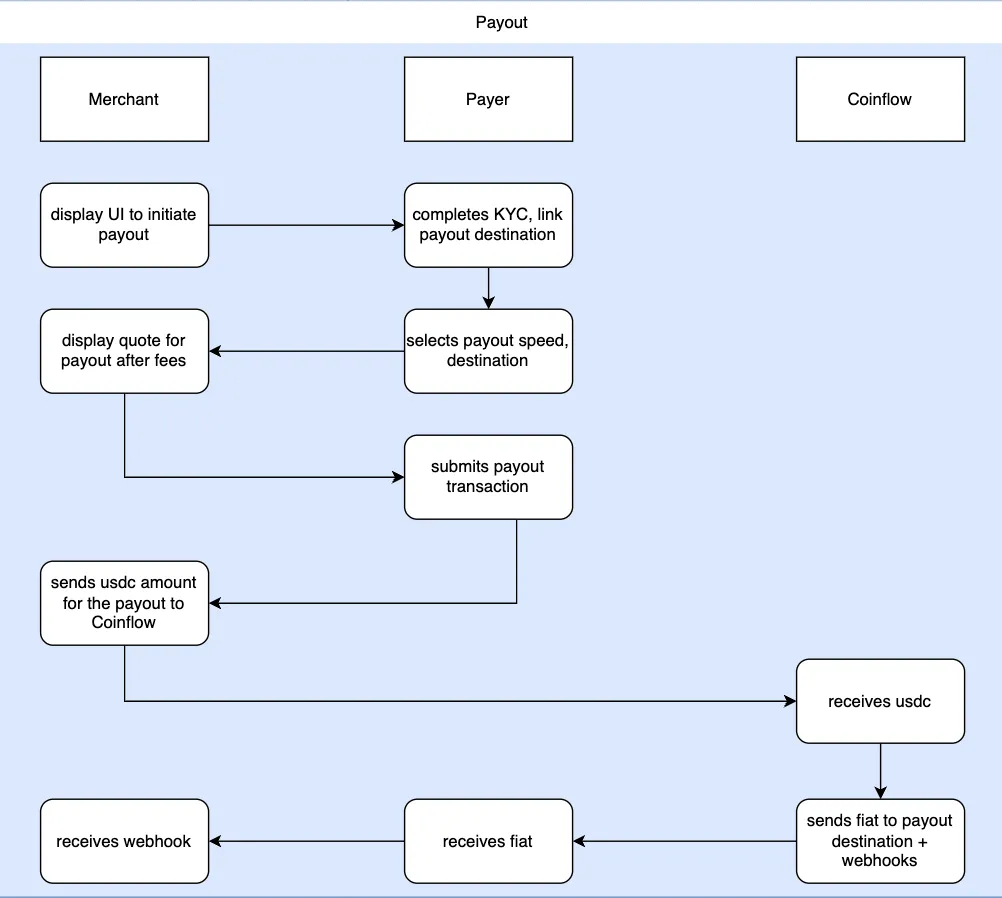
In this flow, your platform funds payouts from your Coinflow Balance and initiates payouts on behalf of users. This is ideal for platforms that manage user balances internally. (For advanced setups using your own wallet, see the BYO option below.)
How It Works
- User requests withdrawal through your platform’s interface
- Your backend initiates payout by calling Coinflow’s API
- Funds are debited from your Coinflow balance
- Coinflow delivers the payout to the user’s bank account or card
- User receives funds in their selected payout destination
Flow of Funds
When to Use This Flow
- Gaming platforms - Where you manage in-game currency and user balances
- Betting platforms - Where winnings are tracked in your system
- Rewards programs - Where you’re paying out rewards or cashback
- Marketplace platforms - Where you manage seller payouts
Implementation Options
Choose based on your wallet preference:
Option 1: Using Coinflow Balance
Advantages:
- No wallet management
- No gas fees
- Simpler integration
Advanced: Bring Your Own Wallet
Option 2: Using Your Own Wallet (BYO)
Advantages:
- Full wallet control
- Use existing infrastructure
- Direct blockchain access
Key Considerations
- User Identification: Uses your internal user IDs (not wallet addresses)
- KYC Required: Each user must complete verification before their first payout
- Balance Management: You’re responsible for tracking user balances in your system
- Funding: Ensure a sufficient balance to cover all payouts. Top up via wire transfer. (Advanced merchants can also fund via stablecoin transfer — see the BYO setup.)
- Fees: Can be configured to be paid by merchant or user
Next Steps
- Configure your settlement settings
- Choose your implementation guide (Coinflow wallet or BYO wallet)
- Integrate payout endpoints
- Test in sandbox environment